
Everything You Need to Know About Pediatric SOAP Notes
Summarize this article with:



During the visit, an infant seemed very uncomfortable and sick. Parents explained all the changes and concerns they have observed in their child’s routine. On the other hand, pediatrician carried out required physical check-ups.
Now, to get better view of child’s health, parental observations and clinical findings must be brought together. But how can these scattered pieces of information be connected? SOAP notes in pediatrics provide a perfect medium to present these details in a structured and unified format.
They are an integral part of pediatric clinical documentation that helps pediatricians to link parent stories with medical assessment for decoding actual health problems.
To explore more about the role of SOAP notes in pediatric practice, keep reading this article.
What Are Pediatric SOAP Notes?
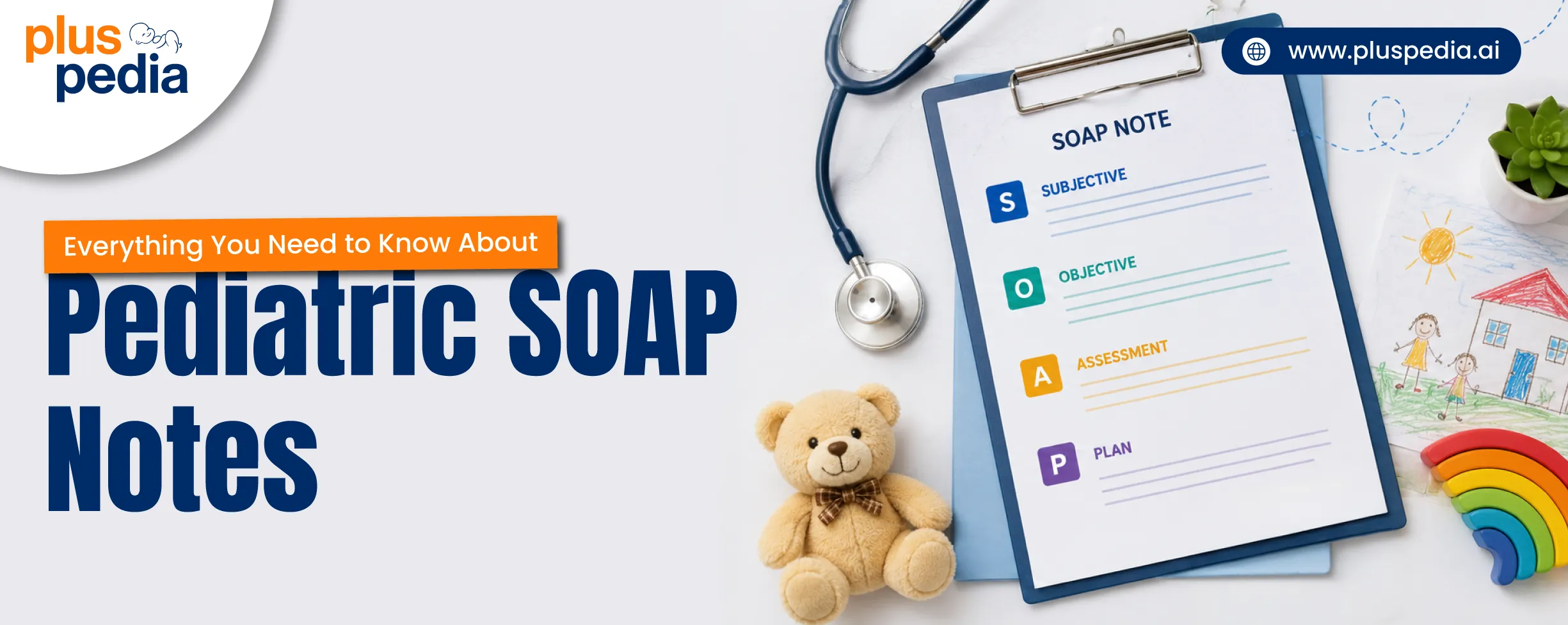
SOAP notes are one of the standard ways of documenting a visit. It represents the medical information in 4 sections: Subjective, Objective, Assessment, Plan – this is what the SOAP stands for.
Deliver better newborn outcomes through connected neonatal care management.
Pediatric SOAP notes are not like generic ones because children go through many evolutions based on their age. Additionally, the information for SOAP notes can be collected from multiple persons in case if child has not yet completely grown enough to describe his/her condition.
Pediatric SOAP notes can arrange child health-specific encounters in an organized manner to maintain consistency in documentation.
What Does a Pediatric SOAP Note Include?
From parents’ observations and concerns to pediatricians’ care plan, everything has a specific place in SOAP documentation. Let’s explore the SOAP note format in pediatrics to understand what details are covered under S, O, A and P sections.
Subjective (S)
This part mainly represents the information collected from child (in case if he/she can communicate), parents, caregivers or other sources such as school, daycares, previous medical records etc.
Read More : Features Every Pediatric EMR Should Have
It includes:
Chief Complaint (CC): The reason for the visit or concern of parents related to child’s health is described in short sentence.
Details related to illness: This includes deep information related to child’s present health condition such as when the problem begins, how long does it is going, whether it remains consistent or comes occasionally, the actual location of problem, related symptoms, have patient tried any home remedies or medications, what makes the problem better or worse.
Patient History:
-
Birth history (in case of newborn and infants): Maternal complications or exposure to drugs during pregnancy, gestational age, type of delivery, birth weight and Apgar scores
-
Previous severe treatments or surgeries
-
Immunization records (mention which doses are ongoing, completed or missed)
-
Allergies related to food or medicine
Medications: Regular medicines or occasional medicines that the patient needs to take in their routine.
Family Health Condition: If mother, father, sibling or grandparents are suffering from specific health problems (such as asthma, diabetes, cancer, or mental issues) then it will be mentioned in this section.
Create clear, complete discharge summaries faster with smart automation.
Developmental Details (for infants and young children):
Mention skills related to communication abilities, cognitive activities, social behavior, gross & fine motor development etc.
It also represents parent or caregiver concerns related to delay in child’s progress.
Objective (O)
Objective section covers what pediatricians observe, evaluate and examine during the consultation through physical check-ups or diagnostic assessments. It is different from subjective part as it involves recording clinical findings.
Vital signs:
In this, body’s most essential physiological factors are evaluated which include:
- Temperature
- Heart rate
- Respiratory rate
- Oxygen saturation
- Blood pressure
Growth Measurements:
Here the child’s progress metrics are recorded. Some of these are head circumference (for infants), growth percentiles, recumbent length (for infants that can’t stand), height and weight.
Physical Examinations:
Pediatrician record information related to general appearance such as:
-
Behavior: lazy, active, bubbly, playful, crying but consolable
-
Skin: color, pigmentation, rashes, texture
-
Head, eyes, ears, nose, throat: shape of head, softness of fontanelles (in infants), redness in eyes, pupil alignments & movements, color & position of eardrum, size & shape of tonsils etc.
-
Respiratory examinations: nasal flaring, tracheal tugging and abnormal breathing patterns
-
Cardiovascular findings: heart sound, capillary refill time, peripheral circulation
-
Abdominal examination: shape and size of abdomen, check visible peristalsis and masses.
-
Neurological findings: level of alertness, interaction with parents, mobility styles, muscle tone, reflexes.
Simplify pediatric patient management with smart, centralized workflows.
Diagnostic and Laboratory Results:
This includes the details related to any imaging scan (X-ray, ultrasound, MRI etc.) or laboratory test (CBC, CRP, Rapid flu test etc.) carried out on child.
Assessment (A)
Assessment part represents the analysis of information collected during the pediatric encounter. It combines the information from subjective and objective sections and then provides the result regarding child’s health status.
The pediatricians analyze the available information then connects the observed symptoms with clinical findings, diagnostic scans and laboratory test.
Read More : How AI Is Transforming Pediatric Healthcare
Document the additional child health problems identified in between the assessment. Interpret every result found from primary analysis and notes down the severity of situation (worst, better or stable).
If still the actual cause of child health is not yet identified, then pediatrician can document the areas that need to be reconsider.
Plan (P)
Plan section provides guidance on what should be done next after the assessment i.e., after the final condition of child’s health is identified.
It may include:
-
Treatment or surgeries if in case any severe problem get diagnosed
-
Medications and regular health check-ups if situation can be controlled through consuming required drugs
-
Further evaluation, laboratory test or imaging scan that can be required based on detected problem
-
Referrals to another experts if condition can’t be handled by internal pediatricians
-
Care recommendations (related to post treatment homecare or simple lifestyle changing tips in case of minor health problems) for parents and caregivers.
-
Information related to next follow-up visit and preventive care for healthy child future.
Why Are SOAP Notes Important in Pediatric Care?
Have you ever thought that despite other clinical documentation why SOAP notes make more impact on pediatric workflows? Here is the answer:
- It presents parental observation & clinical assessment together and provides a complete visual of actual child condition.
- Enhance care continuity by providing details of previous visits to the experts.
Collaborate efficiently while maintaining secure access for every user.
- It can contribute in identifying changes in child health by comparing notes from current and previous visits.
- Boost collaboration by eliminating miscommunication and confusion through structured documentation
- Separates parent/caregivers’ information, clinical findings, evaluation and final actions to introduce more clarity.
Common Mistakes to Avoid in Pediatric SOAP Notes
Now you are aware of how crucial SOAP notes in pediatrics are for effective clinical documentation, then let’s discuss what blunders you must avoid while generating them.
-
Not considering caregivers or day care persons’ observations
-
Entering subjective information into objective section
-
Using unclear or general statements to describe any child’s health condition
-
Not given much attention to parent/care giver education part
-
Missing detailed medication information such as time, duration and frequency
-
Skipping important pediatric medical records such as growth metrics, developmental milestones and other required vital signs.
Read More : HIPAA vs Indian Healthcare Data Regulations
Conclusion
Pediatric clinical workflow can influence through small details including child experiences, parent observations, pediatrician findings and child responds to treatment.
SOAP notes in pediatrics can present these details in structured and organized format making it clearer and easier to follow.
By understanding the Subjective, Objective, Assessment and Plan section, pediatricians can ensure informed decision and continuity of care.
Eventually a well-written SOAP note is not just a document, it is the tool that streamlines patient care, guarantees legal safety and contributes accurate medical billing.
FAQs
A pediatric SOAP note generally includes the child’s presenting concerns, symptoms and relevant history, vital signs, growth measurements, examination findings, clinical assessment, treatment or care plan, parent education, and follow-up information, as appropriate to the encounter.
The basic SOAP structure remains the same, but pediatric documentation often needs additional age-specific information, such as growth measurements, developmental milestones, vaccination history, feeding patterns, and information provided by parents or caregivers.
For pediatric patients, the SOAP note should also capture age-appropriate information about growth, development, feeding, vaccinations, and caregiver observations when relevant to the encounter. The goal is not to include every possible detail in every note, but to document the information necessary for that child’s care.
Documentation requirements vary depending on the healthcare setting, applicable regulations, organizational policies, and the type of encounter. Healthcare professionals should follow the documentation standards applicable to their practice.
Yes. Pediatric EMR or EHR systems can provide structured SOAP documentation and connect clinical notes with other records, such as growth charts, vaccination records, medical history, and follow-up information.
.webp)
Recent Posts

Why Paper Records Are Holding Pediatric Clinics Back?
September 03, 2026Everything You Need to Know About Pediatric SOAP Notes
August 27, 2026
How AI Is Transforming Pediatric Healthcare
August 25, 2026
HIPAA vs Indian Healthcare Data Regulations
August 24, 2026